Who's the Best for Zero-Footprint Diagnostic Viewing: RamSoft vs Medicai
Many radiology teams still toggle between desktop software and web links when they need to read studies outside the reading room. This split creates delays when a surgeon in the OR needs an urgent look at the same scan a radiologist reviewed at home. The choice between Medicai and RamSoft zero-footprint viewers now decides how quickly those images reach every care setting.
By the final section you will know exactly which platform meets your access rules, which one scales across multiple sites without extra hardware, and which delivers the clearer path for diagnostic viewing today.
Quick Verdict: Medicai vs RamSoft for Zero-Footprint Diagnostic Viewing
Medicai delivers zero-footprint diagnostic viewing through its browser-based DICOM viewer that processes over 300k study visualizations annually with no software installation required.
RamSoft relies on traditional PACS installations that demand desktop software and local system access. Public sources provide limited details about RamSoft performance specifications, making direct comparisons difficult.
Medicai handles over 50 million API transactions each year while maintaining HIPAA and GDPR compliance. The platform operates globally through Microsoft Azure infrastructure.
Its FDA and CEE cleared viewer supports secure medical imaging access for radiologists and referring physicians. Over 10,000 active doctors currently use the system across 70 clinics and hospitals.
Research suggests zero-footprint solutions reduce deployment time and IT overhead compared to installed software. Medicai stores 1.7 million studies and has processed 2 million imaging studies total.
The platform reduces diagnosis time by 65 percent through efficient image distribution and study sharing. Browser-based access eliminates the need for local PACS installations or software updates.
Security follows OWASP guidelines with encrypted data transmission and controlled access protocols. This approach supports teleradiology workflows and multidisciplinary collaboration without geographic restrictions.
At a glance: how Medicai compares to RamSoft on the features that matter most.
| Feature | Medicai | RamSoft |
|---|---|---|
| Zero-Footprint Diagnostic Viewing | ✓ | ✓ |
What Is Medicai?
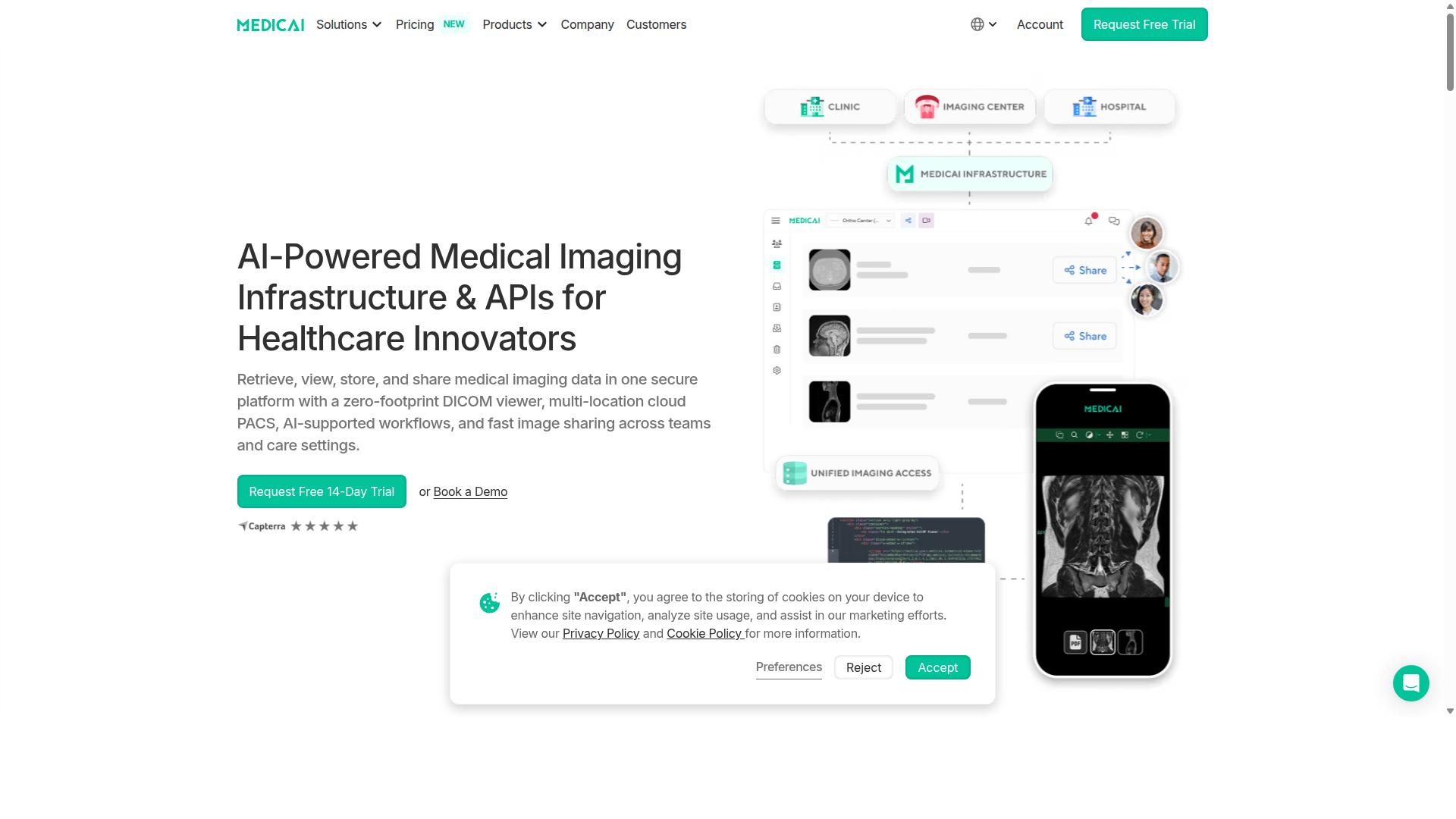
Medicai operates as a cloud-based medical imaging platform that enables retrieval, storage, and sharing of DICOM studies within a single secure environment. The solution delivers a zero-footprint DICOM viewer for diagnostic viewing without downloads or installations.
Healthcare teams access multi-location cloud PACS that stores imaging data across facilities. This architecture supports radiology workflow needs from radiologists and referring physicians who require browser-based access.
Study sharing features allow image distribution between care settings. The platform processes over 1 million studies annually while maintaining 1.7 million studies in active storage.
AI-supported workflows assist with image interpretation and organization tasks. Fast image exchange reduces delays that often occur in teleradiology and multi-site radiology practices.
Healthcare providers benefit from Imaging Infrastructure as a Service that modernizes traditional PACS setups. The platform focuses on interoperability between existing systems and care teams.
What Is RamSoft?
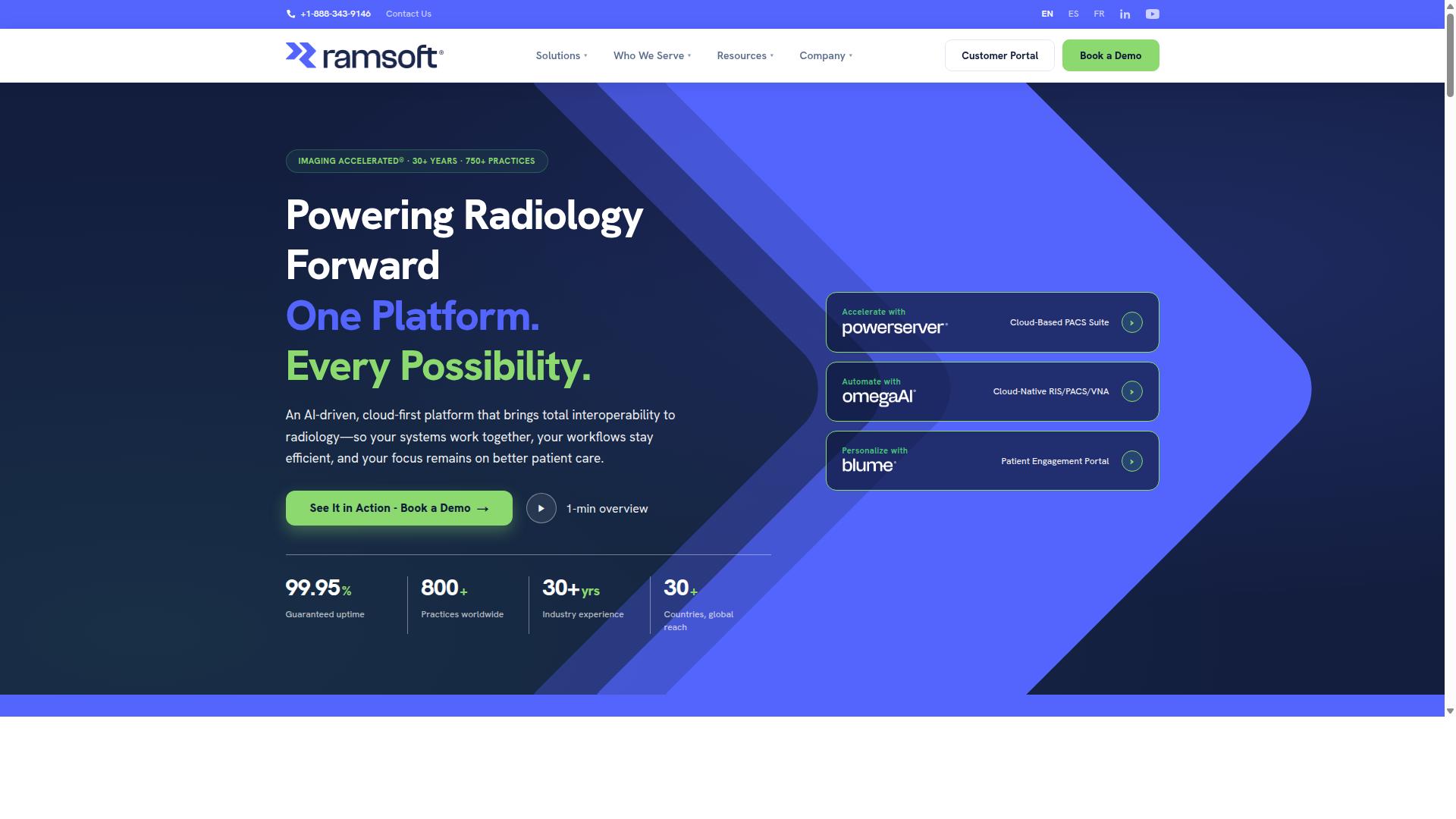
RamSoft provides radiology workflow and PACS solutions primarily targeting imaging centers and radiology departments. The company focuses on image distribution and study sharing for healthcare facilities that need secure access to medical imaging data.
RamSoft positions itself as a cloud PACS provider that supports radiology workflow management. Organizations use the platform for teleradiology operations and image archive functions that connect radiologists with referring physicians.
The system handles DICOM files and supports multiple modalities including CT, MRI, X-ray, ultrasound, and mammography studies. Users access the platform through web viewer capabilities that allow browser-based diagnostic viewing on standard devices.
Healthcare facilities evaluate RamSoft when they need vendor neutral archive functionality and RIS integration options. The platform addresses image distribution requirements for practices that manage both in-house and remote reading workflows.
Features Compared
Three critical feature categories distinguish zero-footprint diagnostic viewing platforms from traditional PACS solutions.
Performance determines how quickly images load and render in standard web browsers. Scalability shows whether systems can grow with increasing study volumes across multiple sites. Security requirements cover how platforms protect patient data during transmission and storage.
These three areas form the basis for evaluating zero-footprint solutions. Each category reveals different strengths when comparing available platforms for diagnostic viewing needs.
Zero-Footprint Viewer Performance
Zero-footprint performance depends on browser-side rendering speed and network latency without local software dependencies.
Medicai achieves 300k+ annual visualizations of DICOM studies through cloud processing. The system supports browser-based rendering across standard web browsers without requiring installations or plugins.
Typical browser-based DICOM rendering handles multi-modality studies including CT, MRI, X-ray, ultrasound, and mammography. Annotation tools and measurement tools function directly within the web viewer environment.
RamSoft's zero-footprint capabilities cannot be independently verified through publicly available information. Performance claims for RamSoft require direct verification from the vendor.
Cloud PACS Scalability
Cloud PACS scalability determines how effectively systems handle growing imaging volumes and multi-site deployments.
Medicai demonstrates scalability through 1.7M+ studies stored and 1M+ annual transactions. The cloud PACS supports vendor neutral archive capabilities with 2M+ imaging studies uploaded to date.
The platform serves 70 clinics and hospitals with 10,000+ active doctors accessing studies. This user base reflects the system's capacity for multi-site deployments and image distribution across different healthcare networks.
RamSoft positions itself as a cloud PACS provider without specific storage or transaction metrics available in public information. Direct vendor consultation provides the clearest picture of RamSoft's scalability capabilities.
Security & Compliance
Security and compliance certifications establish baseline requirements for handling protected health information across healthcare networks.
Medicai maintains HIPAA and GDPR compliance status along with FDA/CEE cleared viewers. The platform follows OWASP security guidelines for medical imaging applications.
General security requirements for medical imaging platforms include encrypted data transmission, access controls, and audit trails. These standards protect patient information during teleradiology workflows and study sharing between facilities.
RamSoft's specific compliance certifications are not detailed in available public information. Healthcare organizations should request current compliance documentation directly from RamSoft for security evaluation.
Pricing Compared
Pricing structures reveal significant differences between transparent cloud platforms and traditional licensing models. Medicai offers clear monthly and yearly options that align with different practice sizes and imaging volumes.
The Starter plan costs $249 per month and includes 500 GB of cloud storage along with unlimited user accounts. This tier works well for smaller practices that need secure, browser-based access to studies without managing on-premise servers.
The Standard plan costs $749 per month and provides 2 TB of cloud storage plus one connected location. This option suits growing radiology groups that require more capacity for multi-modality studies and external image distribution.
Yearly billing provides 15 percent savings, bringing the Starter plan to $209 per month and the Standard plan to $639 per month. Enterprise customers can request custom pricing based on storage needs and multiple connected locations.
RamSoft pricing is not publicly available and requires direct contact with the vendor. This approach makes it difficult for practices to compare costs quickly when evaluating zero-footprint diagnostic viewing solutions.
Medicai also includes a DICOM Gateway setup fee of $1,000 per location and offers a 14-day free trial of Starter features without requiring a credit card. Per-study pricing is available for enterprise customers who prefer usage-based billing over fixed monthly fees.
Who Should Choose Medicai
Healthcare organizations requiring browser-based access across distributed teams benefit most from Medicai's architecture. Zero-footprint diagnostic viewing eliminates local installation needs. Teams gain immediate access through standard web browsers.
Hospitals and imaging centers with multiple locations find this approach particularly effective. Remote access enables radiologists to review studies from any location. The same applies to referring physicians who need quick consultations without specialized software.
Specialty providers in orthopedics, neurology, and oncology benefit from teleradiology workflows. These practices often coordinate care across multiple sites and providers. Browser-based access supports seamless image distribution without additional infrastructure.
Cardiology and radiology groups handling high study volumes require reliable access. Web viewer capabilities allow secure study sharing with referring physicians. This supports faster consultation cycles and improved patient care coordination.
Virtual care providers and telemedicine platforms need secure image access for their workflows. Patient portal functionality extends these capabilities to patients as well. Medical education organizations and clinical trials also rely on this browser-based approach for distributed team collaboration.
Who Should Choose RamSoft
Organizations preferring established on-premise radiology workflow solutions may evaluate RamSoft for traditional deployment models.
RamSoft has positioned itself within the PACS market through conventional installation approaches that many radiology departments already understand. These systems typically require dedicated servers and internal IT oversight to manage image archives and maintain DICOM connectivity.
Imaging centers that prioritize physical control over their data infrastructure often find appeal in such established deployment patterns. The familiar interface and workflow can reduce training time for radiologists already accustomed to similar platforms.
However, these traditional models come with specific considerations around infrastructure maintenance and scalability. Organizations must weigh these factors against their long-term operational needs and technology preferences.
Zero-footprint diagnostic viewing has become increasingly important as healthcare facilities seek to reduce local hardware dependencies. Browser-based access allows referring physicians and radiologists to review studies across multiple locations without software installation requirements.
Modern image distribution needs often favor solutions that support secure access from any location. This capability proves valuable for teleradiology workflows and situations where multiple specialists must review the same studies simultaneously.
Research suggests that facilities prioritizing no-install medical imaging access tend to evaluate cloud-based alternatives more frequently. These platforms can address both clinical workflow requirements and the practical constraints of distributed healthcare environments.
Final Verdict
Healthcare organizations prioritizing zero-footprint access, transparent pricing, and proven cloud scalability should evaluate Medicai against traditional alternatives. The decision depends on whether teams need browser-based diagnostic viewing without installation requirements or prefer conventional desktop solutions.
Medicai delivers a complete zero-footprint platform for medical imaging with 300k+ visualizations completed globally. The solution operates through standard web browsers, eliminating the need for local software installations across different healthcare facilities.
Compliance standards include HIPAA and GDPR requirements along with FDA and CEE clearance for diagnostic use. These certifications support deployment across multiple jurisdictions without additional regulatory hurdles for most medical imaging workflows.
Transparent pricing starts at $249 per month with no hidden fees or complex licensing structures. This predictable cost model helps radiology departments plan budgets accurately without unexpected expenses during implementation phases.
Global availability extends to both North American and European healthcare markets through dedicated regional offices. Organizations can reach Medicai USA at +1 (832) 220 1035 or Medicai Romania at +40 316 305 875 for evaluation inquiries.
Teams seeking browser-based diagnostic viewing should contact [email protected] to discuss specific requirements. The combination of verified compliance, transparent pricing, and worldwide availability positions Medicai as a practical choice for modern radiology operations moving away from traditional PACS installations.
Recommended Resources: