Top 7 Alternatives of Google Medical Imaging Suite
Many radiology teams now face rising storage fees and slower image retrieval after Google scaled back its Medical Imaging Suite support.
Those teams need a new platform that keeps studies accessible without extra cost spikes. This article lays out the seven strongest options, the features that matter most when replacing cloud PACS, and why Medicai ranks first for most providers.
What to Look For in Google Medical Imaging Suite Alternatives
Healthcare organizations evaluating Google Medical Imaging Suite alternatives should prioritize five core capabilities before making a switch.
HIPAA and GDPR compliance represents the foundation of any medical imaging platform. Look for solutions that meet standards from the Office for Civil Rights and EU data protection frameworks. These regulations govern how patient data moves between systems and who can access imaging records.
Zero-footprint DICOM viewers enable radiologists to access studies without installing software on local computers. This capability supports teleradiology workflows and allows clinicians to review images from any location with internet access. Browser-based viewing reduces IT maintenance requirements across healthcare facilities.
3D reconstruction and quantitative imaging tools help clinicians extract measurements from CT scans and MRI studies. These features support tumor volumetry calculations and lesion detection workflows. Quantitative analysis assists radiologists in tracking disease progression over multiple time points.
HL7 and FHIR API integration connects imaging platforms with existing EHR systems. This connectivity ensures radiology reports and imaging data flow automatically into patient records. Structured reporting capabilities maintain consistent documentation standards across different clinical departments.
Scalable storage with vendor neutral archive support allows organizations to expand capacity as imaging volumes grow. This approach prevents vendor lock-in and supports long-term data retention requirements. Cloud radiology solutions can scale storage resources based on actual usage patterns.
1. Medicai - Best Overall
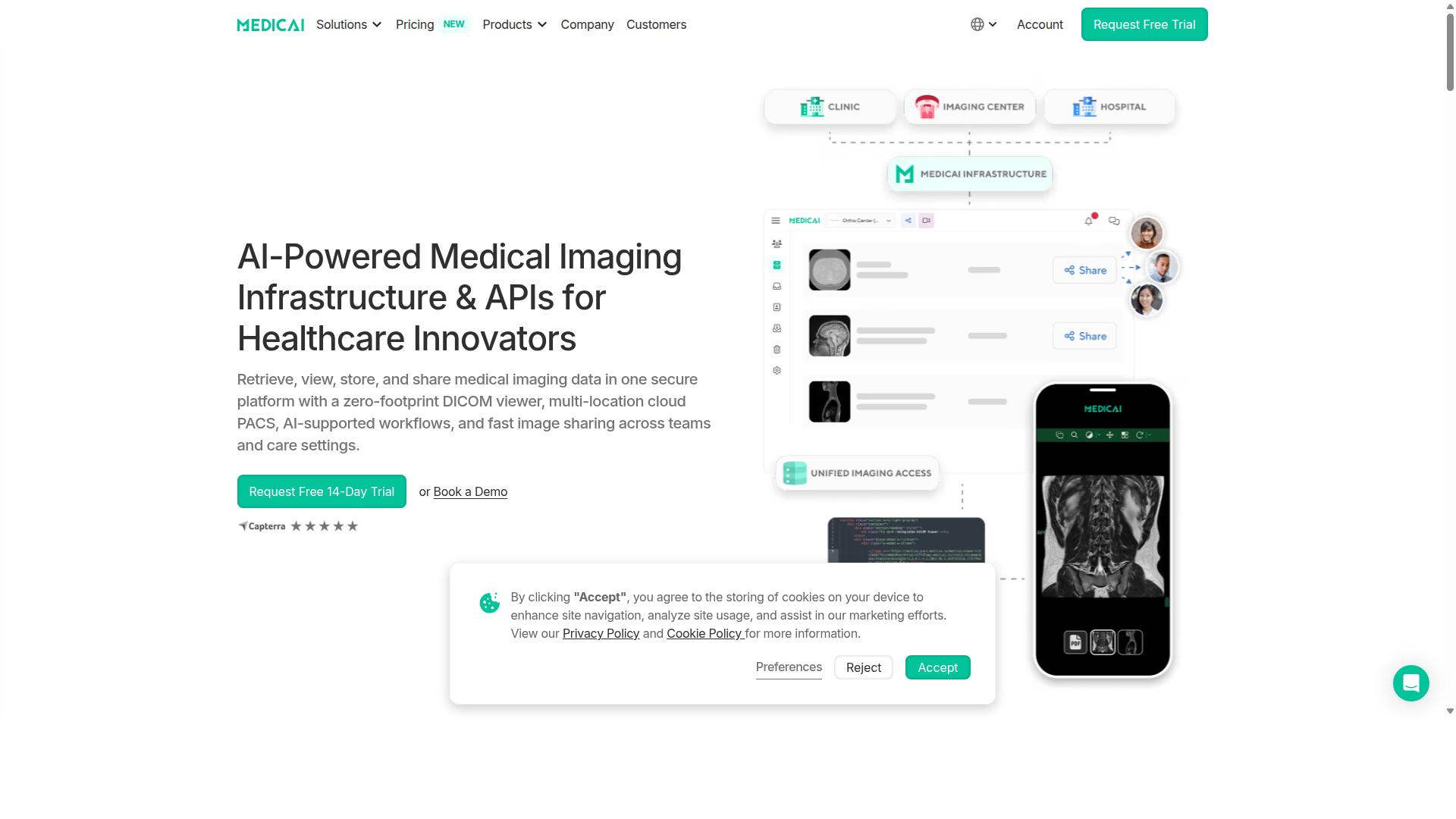
Medicai stands out among Google Medical Imaging Suite alternatives by combining enterprise-grade medical imaging infrastructure with a zero-footprint viewer. The platform brings together retrieval, viewing, storage, and sharing functions in one secure environment. Healthcare organizations gain a unified system that supports both routine clinical work and advanced diagnostic needs.
This integrated approach reduces the need for multiple disconnected tools that often complicate radiology workflows. Teams can access studies and collaborate without switching between separate platforms for different tasks. The design supports both individual practitioners and larger hospital networks.
Key Features and Capabilities
The platform delivers a comprehensive suite of diagnostic imaging tools designed for modern radiology workflows. It processed 1M+ studies annually while generating 300k+ DICOM visualizations in the past year. The FDA/CEE cleared viewer meets regulatory standards for clinical use across different care settings.
Medicai partners with OHIF, MedDream, and Rayscape.ai to extend imaging capabilities beyond basic viewing. These collaborations enable advanced features while maintaining a single platform for day-to-day operations. The system follows OWASP security guidelines and maintains HIPAA and GDPR compliance for protected health information.
The service functions as Imaging Infrastructure as a Service, supporting both cloud PACS and external integrations. With 2M+ studies uploaded and 10,000+ active doctors using the platform, it serves diverse clinical environments from individual clinics to multi-site hospital systems.
Pricing and Value
Medicai offers transparent monthly pricing designed to scale with imaging volume and organizational needs. The Starter tier costs $249/month and includes 500 GB of cloud storage with unlimited user accounts. This option suits smaller practices or teams beginning to consolidate their imaging systems.
The Standard tier at $749/month provides 2 TB of storage plus one connected location for organizations managing multiple sites. Both tiers include unlimited accounts, allowing teams to grow without additional per-user costs. Enterprise pricing addresses custom storage requirements and multiple connected locations.
Yearly billing reduces costs further with 15 percent savings, bringing Starter to $209/month and Standard to $639/month. A 14-day trial of Starter features requires no credit card, letting organizations evaluate the platform before committing to a paid plan. Per-study pricing options exist for enterprise customers with specific usage patterns.
2. Studycast
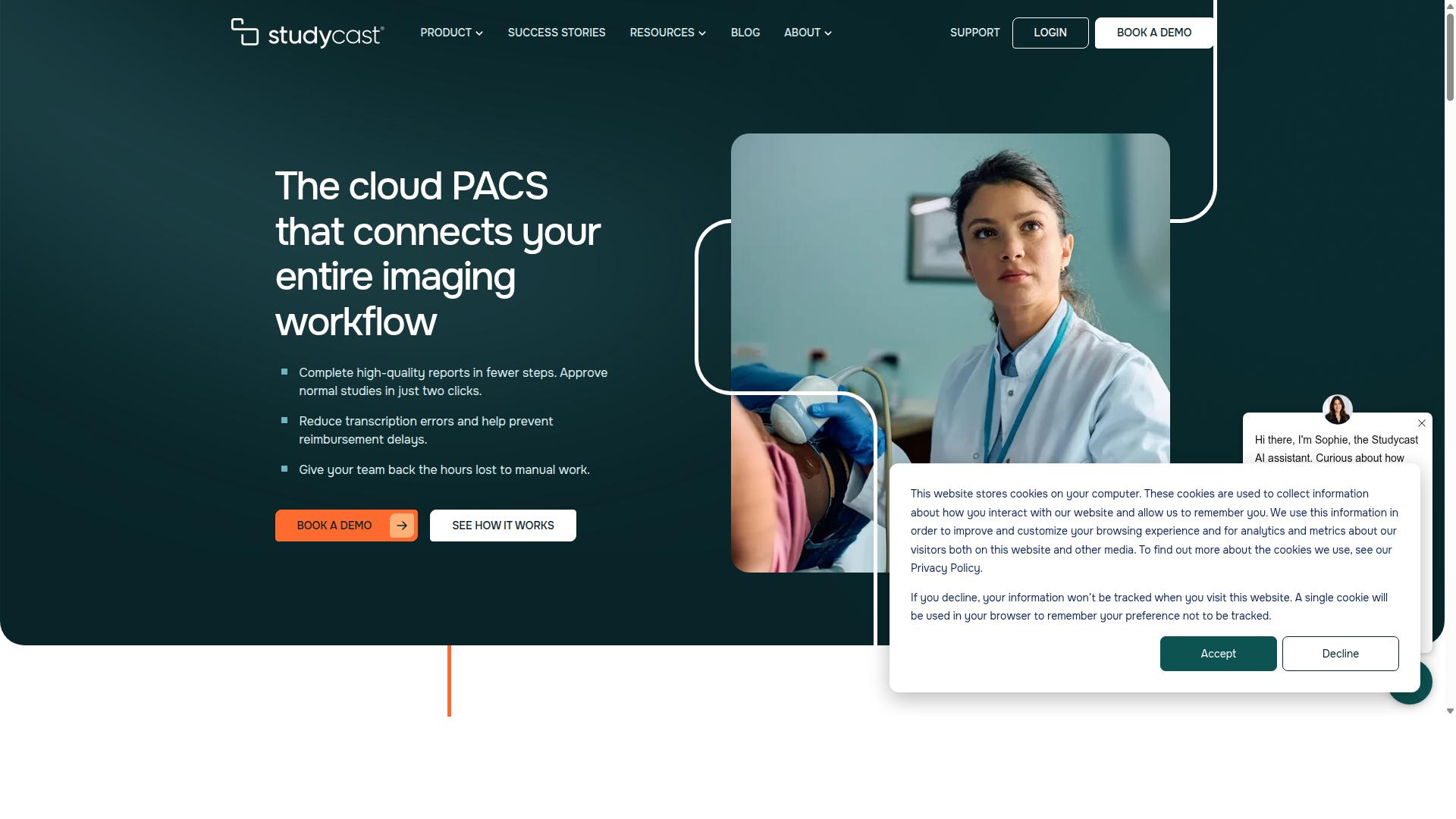
Studycast provides cloud-based ultrasound workflow solutions that may suit smaller imaging centers focused primarily on echo and vascular studies. The platform handles storage, review, and reporting across multiple modalities including ultrasound, nuclear imaging, X-ray, and MRI. Organizations use these medical imaging alternatives when they need structured reporting combined with workflow automation.
Cloud PACS capabilities allow teams to access studies from different locations without maintaining on-premise servers. The system supports image sharing and integrates with existing EHR platforms through standard protocols. Many practices appreciate the ability to send reports and images securely while maintaining HIPAA compliant imaging standards.
Typical users include physicians, sonographers, administrators, and IT staff across private practices, office-based labs, and ambulatory surgery centers. The solution addresses radiology workflow needs through automation that reduces manual steps in the reporting process. Research suggests that structured reporting tools help maintain consistency across different reading physicians.
Studycast serves a range of specialties beyond cardiology and vascular imaging. Facilities handling women health studies, point-of-care ultrasound, and veterinary imaging can utilize the platform. The vendor neutral archive approach allows organizations to consolidate studies from various equipment manufacturers into a single system.
3. Intelerad
Intelerad offers an enterprise PACS platform often adopted by large hospital networks requiring extensive multi-site connectivity. The platform focuses on enterprise image exchange that supports secure sharing across healthcare systems. Hospitals use this approach to connect radiology, cardiology, and pathology departments.
Multi-site support helps organizations consolidate imaging records from different locations into one workflow. This structure reduces delays when specialists need access to studies performed at remote facilities. Large health systems rely on such connectivity to maintain consistent care standards.
The platform also includes advanced visualization tools that handle DICOM workloads across multiple imaging modalities. These tools support integration with vendor-neutral archives. Health systems use this combination to unify records from CT, MRI, and ultrasound departments.
Enterprise features like these appeal to organizations that manage high imaging volumes across several sites. The platform design allows radiology teams to maintain structured reporting and image access without switching between separate systems. Many facilities adopt this approach to simplify their existing PACS environment.
4. ProtonPACS
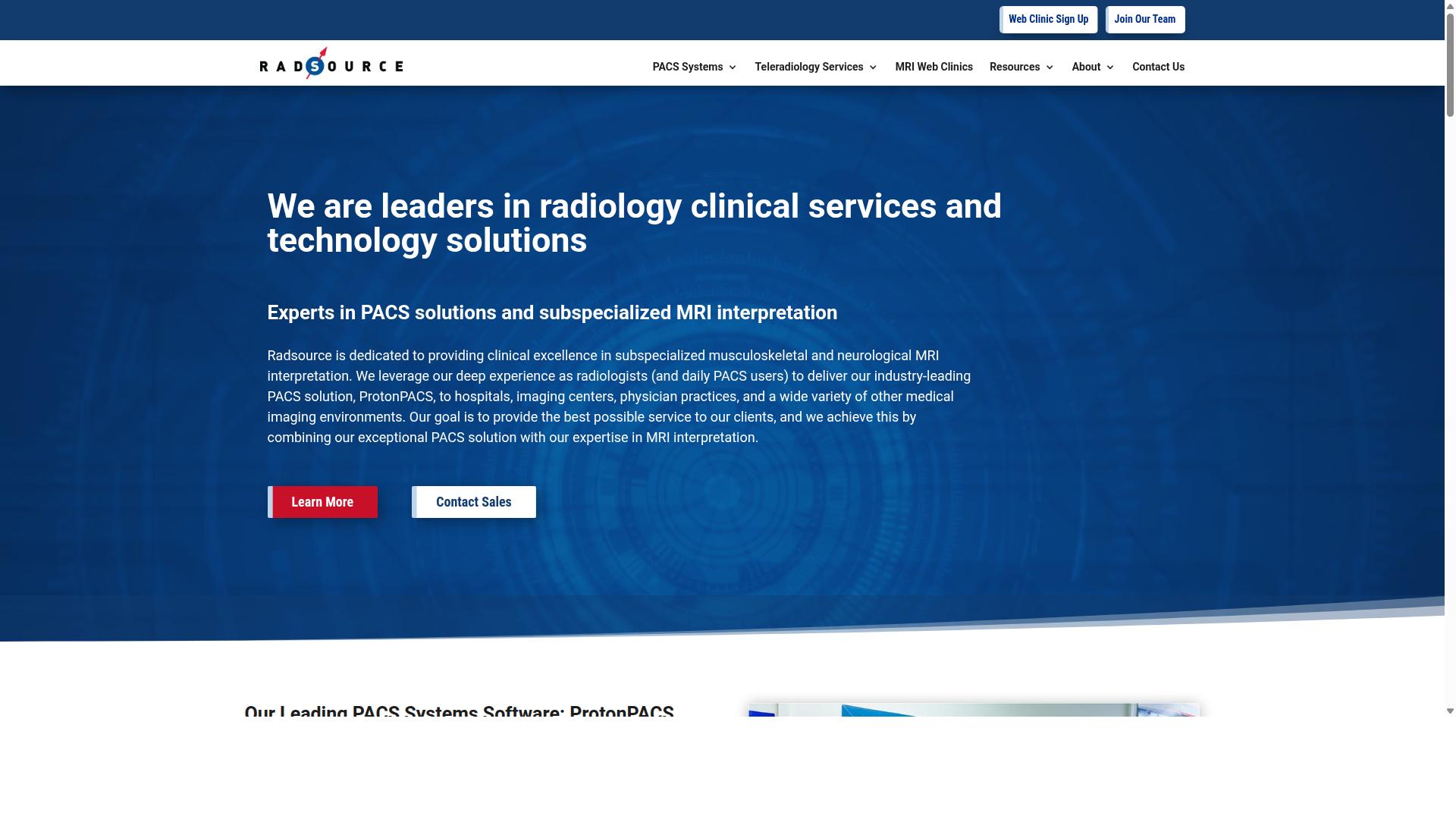
ProtonPACS delivers a hybrid on-premise and cloud PACS model that may appeal to facilities transitioning from legacy systems. This approach combines local storage control with cloud scalability for medical imaging needs. Organizations often find this balance helpful during gradual technology upgrades.
ProtonPACS by Radsource provides centralized storage for images from MRI, CT, x-ray, and ultrasound modalities. The platform includes advanced workstations equipped with AI tools and 3D reconstruction capabilities. Real-time updates and multi-device accessibility support radiology workflows across different practice settings.
Automated measurements and worklist automation help streamline daily operations for radiology professionals. The system integrates with RIS and EMR platforms to support coordinated care environments. HIPAA-compliant security measures protect patient data throughout the imaging process.
Orthopaedic practices, hospitals, and imaging centers represent typical users of this solution. These facilities value the combination of advanced imaging tools with reliable operational support. The platform positions itself within the broader category of medical imaging alternatives that address varied organizational requirements.
5. Ambra Health
Ambra Health focuses on image exchange and patient-centric sharing across disparate healthcare systems.
The platform operates as a cloud-based medical imaging SaaS that serves radiology practices, hospitals, and health systems. It offers PACS and Vendor Neutral Archive capabilities that handle both DICOM and non-DICOM images such as JPEG, DOC, and TIFF files.
Users can store, upload, view, and share medical images across multiple sites while connecting with existing EHR systems. Role-based access controls help teams manage permissions based on specific clinical roles and responsibilities.
Web-based diagnostic viewing tools include annotations, measurements, and data anonymization features. Remote collaboration capabilities allow clinicians to work together on imaging studies without requiring physical presence at the same location.
These functions make the system suitable for multi-location networks that need reliable image access and vendor-neutral archiving. Research organizations and academic institutions also use the platform for secure data management and collaborative review processes.
6. UltraLinq
UltraLinq specializes in cloud ultrasound reporting and archiving primarily for cardiovascular and OB/GYN practices.
Many clinics rely on ultrasound workflow tools to manage exam scheduling, image capture, and report generation. These systems streamline daily operations by connecting sonographers with interpreting physicians across different locations.
Reporting templates help standardize documentation for common studies. Users select from pre-built formats that match institutional requirements, reducing variability between different readers.
Typical features include customizable worksheets that follow specific protocols. Staff can adjust measurements and findings sections to match their clinical preferences while maintaining consistency.
Cloud delivery lets teams access studies from various devices without installing local software. This approach supports practices that need remote reading capabilities or multi-site coordination.
Security measures typically include user authentication and encrypted data transmission. These protections align with healthcare compliance requirements for protecting patient information during storage and transfer.
The platform serves diverse settings from rural clinics to larger hospital departments. Each environment benefits from centralized image storage that reduces hardware maintenance burdens.
7. Agfa HealthCare
Agfa HealthCare provides long-standing enterprise imaging solutions with extensive RIS/PACS integration. The platform brings together multiple imaging systems into one unified environment. This approach helps large organizations manage different specialties without switching between separate tools.
Multiple specialties benefit from the platform. Radiology, cardiology, digital pathology, breast imaging, and molecular imaging all work within the same system. The Enterprise Imaging platform supports on-premises, hybrid, and cloud deployment options.
Key products include the XERO Universal Viewer, Streaming Client, and RUBEE AI modules. The RUBEE Orchestrator helps coordinate workflows between different imaging departments. A Vendor Neutral Archive stores images from various sources in one standards-based repository.
Business Intelligence and Enterprise Imaging Scheduling round out the core offerings. These tools support daily operations across complex healthcare networks. The platform emphasizes interoperability and clinician-focused workflows. Organizations seeking medical imaging alternatives often consider this solution when evaluating enterprise-scale options.
How to Choose the Right Option
Selection criteria should map directly to the clinical services and imaging volumes of each practice type. Different medical specialties require different imaging tools and workflow patterns. The right choice depends on matching available features to actual daily needs rather than selecting the most advanced option available.
Orthopedics practices often work with X-ray and CT modalities for bone and joint assessments. These practices need viewers that support bone window presets and measurement tools for implant planning. High patient volumes may require efficient loading times and reliable image archiving.
Neurology and oncology departments typically handle MRI and PET-CT studies with complex multi-series examinations. These specialties benefit from platforms that support 3D reconstruction and quantitative analysis tools. Tumor boards need standardized viewing environments across multiple specialists.
Cardiology practices require ECG integration alongside cardiac MRI and CT angiography capabilities. The workflow demands synchronized viewing of imaging and functional data. Ophthalmology and dentistry use specialized modalities that need dedicated viewing protocols and measurement capabilities.
Pulmonology and gastroenterology services work with CT chest studies and endoscopic imaging respectively. These areas need platforms that handle both radiology and procedural imaging workflows. OB-GYN departments require ultrasound integration with fetal measurement tools and growth tracking capabilities.
Healthcare providers should evaluate how each platform handles their specific modality mix and reporting requirements. Medicai serves hospitals, imaging centers, and specialty providers across these clinical areas through its SaaS platform. The solution supports radiology workflow needs for teleradiology services and clinical trial organizations as well.
Virtual care providers and telemedicine platforms require cloud-based access with HIPAA compliant imaging capabilities. Personal injury lawyers and medical education organizations also use these platforms for case review and training purposes. The patient portal feature extends access to individuals who need their imaging records.
Final Verdict
For organizations seeking a scalable, globally accessible cloud imaging solution, Medicai delivers a strong combination of compliance, performance, and extensibility.
The platform stands out through proven scale and infrastructure. 50M+ yearly API transactions and 1.7M+ studies currently in storage demonstrate reliability at enterprise volumes. Partnerships with Microsoft Azure and Amazon AWS provide global reach, while the connection with Rayscape.ai adds AI capabilities for advanced imaging tasks.
Compliance remains central to Medicai's design. HIPAA and GDPR compliance ensures data protection across regions, and FDA/CEE cleared viewers support clinical use. Organizations processing sensitive patient data can rely on these certifications without additional configuration.
Adoption metrics reflect real-world performance. 70 clinics and hospitals and 10,000+ active doctors use the platform daily. Integration with existing radiology workflows occurs through standard protocols including HL7 and FHIR API connections.
Compared to other medical imaging alternatives, Medicai offers concrete scale rather than potential capacity. The combination of storage volume, transaction throughput, and verified compliance creates a practical choice for teams evaluating cloud radiology platforms. Organizations prioritizing proven infrastructure over promotional features find these metrics particularly relevant when selecting a PACS system or DICOM viewer replacement.
Recommended Resources: