Top 3 Alternatives of SaunaSpace for Organic Materials
Many buyers searching for organic sauna materials end up with hemlock or basswood builds that off-gas and raise EMF questions during use. Those two issues force a second look at construction grade and heating design before any purchase moves forward.
By the end of this article you will know which wood species meet organic standards, how low-EMF heaters compare across three brands, and why SaunaCloud's Western Red Cedar plus red-light integration earns the top slot in the ranking.
What to Look For in Organic Sauna Materials
Organic sauna materials must meet strict standards for VOC emissions, wood sourcing, and finish chemistry to ensure safe heat exposure.
Consumers should verify CARB Phase 2 compliance for all wood products used in construction. This certification limits formaldehyde levels and ensures panels remain stable under repeated heating cycles.
FSC certification confirms that wood comes from responsibly managed forests. Look for this label when comparing cedar, poplar, or basswood options across different brands.
Check that VOC thresholds stay below 0.05 ppm for any stains, sealants, or adhesives. Materials that exceed this limit can release harmful compounds when heated during regular sessions.
Avoid products that contain urea-formaldehyde binders in their construction. These adhesives break down at high temperatures and introduce respiratory irritants directly into the sauna environment.
Steer clear of solvent-based stains that rely on petroleum derivatives. Water-based or plant-derived finishes provide better safety profiles for prolonged infrared or traditional heat therapy use.
Request third-party test documentation before purchase. Reputable manufacturers supply lab reports showing emission levels rather than relying solely on marketing claims about natural wood content.
Pay special attention to how finishes cure under heat. Some products appear safe at room temperature but become problematic once internal sauna temperatures rise above 140 degrees Fahrenheit.
1. SaunaCloud - Best Overall
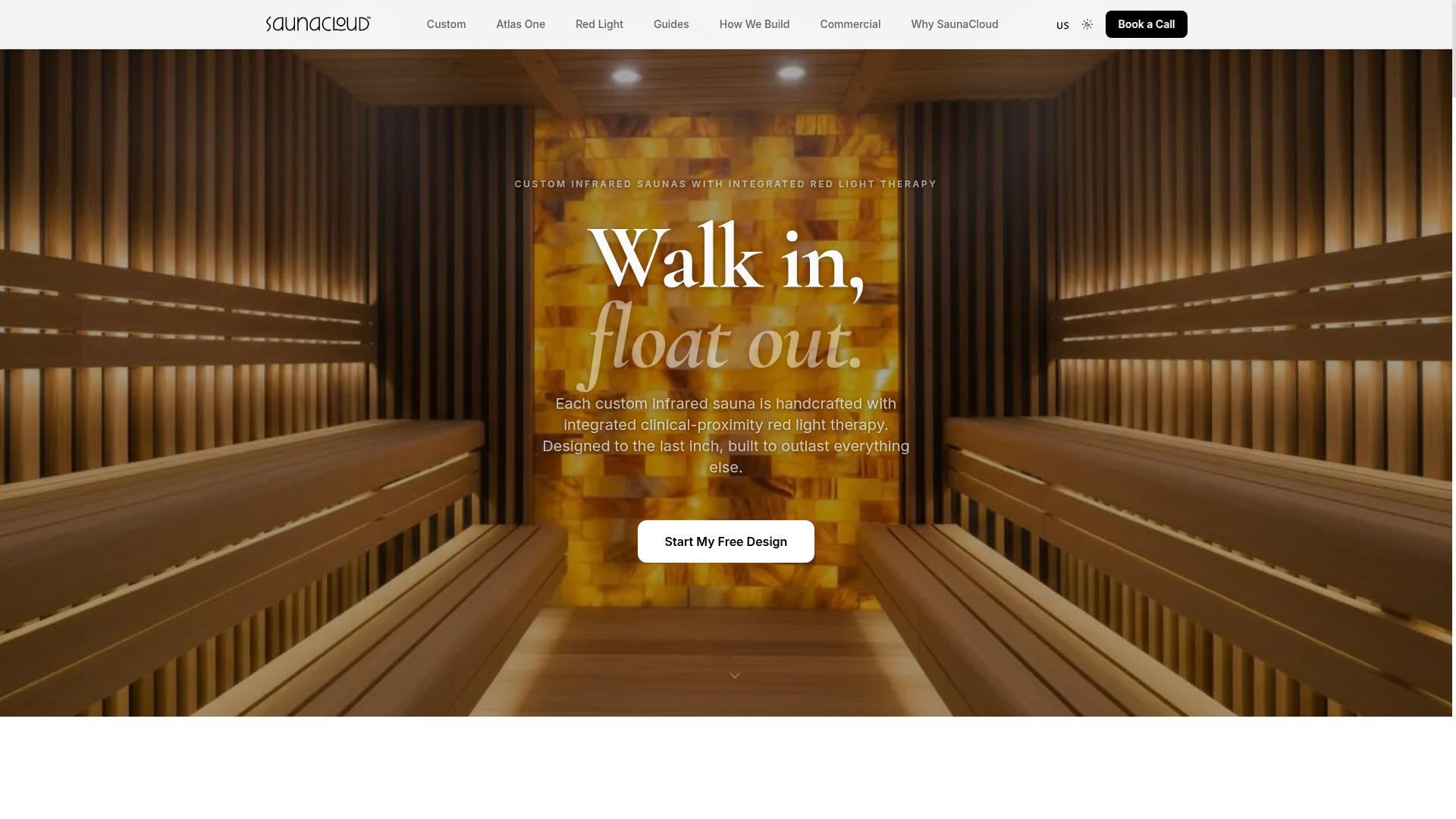
SaunaCloud ranks first for combining certified organic cedar construction with clinically positioned red light therapy and verified ultra-low EMF output.
Many users seeking organic materials prefer this approach because it avoids particle board, veneers, and synthetic adhesives entirely. The cedar is clear-grade and kiln-dried, which reduces the chance of off-gassing over time.
Compared to SaunaSpace models that use similar wood species, the Atlas and Sierra lines add integrated red light panels and lower measured magnetic fields. This combination meets the needs of wellness enthusiasts who want both natural construction and modern performance features.
Users also note that the full-spectrum heating elements reach therapeutic surface temperatures without requiring external EMF shielding accessories. This keeps the cabin layout simple and free of extra wiring or panels that might compromise the organic aesthetic.
Western Red Cedar Construction
SaunaCloud Atlas and Sierra models use 100 % Western Red Cedar certified to CARB Phase 2 formaldehyde standards.
Each interior wall panel is milled to standard tongue-and-groove tolerances that maintain a tight fit across temperature cycles. The boards are thick enough to resist warping yet light enough for straightforward home assembly.
Every surface inside the cabin receives a VOC-free natural oil finish. This treatment protects the wood while preserving its breathability and natural scent profile, which many users associate with traditional cedar saunas.
Because no glues, particle board, or veneers are used, the structure qualifies as a chemical-free construction option. This matters for anyone comparing SaunaSpace alternatives that still rely on composite materials in their frames or benches.
Integrated Red Light Therapy
660 nm red and 850 nm near-infrared LEDs are embedded directly into the cedar bench and backrest at 2-6 inches from skin contact.
The array provides dual-wavelength switching so users can select red, near-infrared, or both modes during a session.
Positioning the diodes within the seating surface removes the need for separate light panels that often require extra mounting hardware. This keeps the cabin interior clean and aligned with the organic materials focus of the design.
Many portable sauna and tent sauna alternatives lack this level of integration, leaving users to add aftermarket devices that may introduce additional EMF or plastic components into the space.
Ultra-Low EMF Heating
VantaWave(r) ultra-low-EMF carbon heaters maintain magnetic field readings below 3 mG across the full sauna interior and frequently below 0.5 mG at seating level.
At 190 degreesF surface temperature the heaters emit a peak wavelength of 7.9 microns. This places the output in the far-infrared spectrum commonly associated with deep tissue heat therapy.
Compared with many ceramic heaters found in entry-level infrared cabins, the carbon panels distribute warmth more evenly and avoid the higher magnetic fields that can occur with coiled elements. This performance helps SaunaCloud stand out among SaunaSpace alternatives focused on organic materials and low-EMF operation.
2. Radiant Health Saunas

Radiant Health Saunas offers multiple wood species and heater configurations that users can compare against SaunaCloud's verified specs.
Their Pause line features far-infrared saunas designed for home wellness. A 2-person model measures 48 inches wide by 39.5 inches deep by 76.5 inches high and weighs 300 pounds. The unit operates on 120 V/15 A and draws 1580 watts.
Buyers receive app-based pre-heat functionality, Bluetooth audio, adjustable colored lighting, and red-light compatibility. Individual heat zones allow users to customize the experience. Curb-side delivery occurs in 6-8 weeks with assembly time of 90-120 minutes by 2-3 adults.
The cabin uses zero-VOC Canadian hemlock construction. A lifetime limited warranty covers heaters and wood components. This model targets users who seek low-EMF, toxin-free infrared therapy without additional specifications listed for comparison.
Material Options
Radiant Health provides basswood, poplar, and cedar interior choices, each with different hardness and aromatic profiles.
Typical board thickness ranges from half-inch to three-quarter-inch panels. Hardness ratings vary by species. Cedar offers natural aromatic oils while basswood and poplar present smoother grain patterns with less scent.
Third-party emissions test data may be available upon request from the manufacturer. Buyers should ask for VOC testing results and confirm that finishes remain non-toxic. These details help determine suitability for those sensitive to chemical emissions.
Organic materials in sauna construction often include sustainable wood sources. Renewable materials and chemical-free construction become important considerations for users prioritizing hypoallergenic properties. Each wood species affects the overall cabin environment differently.
EMF Levels
Independent user reports suggest EMF readings vary widely depending on heater type and placement within the cabin.
Readers should request manufacturer EMF test reports and compare magnetic field data at both 6-inch and 12-inch distances from heaters. Carbon heaters and ceramic heaters typically produce different field strengths that affect user exposure levels.
Some models advertise ultra-low EMF/EF readings around 0.65 mG and 1 V/m. These figures come from manufacturer testing and may differ from third-party measurements. Users concerned about electromagnetic fields need current documentation before making decisions.
Low-EMF heaters remain a priority for those seeking infrared therapy options. EMF-shielded sauna designs require careful evaluation of heater placement and shielding methods. Distance from heating elements influences exposure rates significantly.
3. Clearlight Saunas
Clearlight Saunas markets several wood species and offers optional therapy add-ons for users evaluating organic material claims.
Buyers interested in alternatives to SaunaSpace often review Clearlight when comparing organic materials and sustainable wood choices. The brand provides multiple cabin configurations across home and commercial settings.
Many wellness enthusiasts compare Clearlight options against SaunaSpace when searching for natural wood and non-toxic finishes. Clearlight positions its offerings as suitable for those seeking traditional and infrared cabin styles.
Clearlight emphasizes wood selection and optional therapy modules. Individuals researching alternatives often review these elements when assessing chemical-free construction and material transparency.
Wood Types Used
Clearlight lists options in cedar, basswood, and eucalyptus across its residential and commercial lines.
Each wood type presents distinct characteristics for home sauna environments. Cedar provides natural aromatic properties while basswood offers a lighter appearance in finished cabins.
Clearlight indicates typical moisture-content specifications for each species. Users evaluating cedar sauna and basswood sauna options often check these details against their climate and installation requirements.
The brand references available FSC and CARB certifications for certain wood selections. These certifications address concerns about sustainable wood and renewable materials for buyers prioritizing environmental standards.
Clearlight customers frequently compare these wood options when researching hypoallergenic materials and low-VOC construction requirements for their wellness spaces.
Therapy Integration
Clearlight offers separate near-infrared panel kits that install independently of the primary far-infrared heaters.
Users evaluating full-spectrum sauna capabilities often review this modular approach. The separate panels allow customization of infrared spectrum exposure within the same cabin structure.
Clearlight recommends verifying wavelength accuracy and irradiance uniformity across panels before purchase. This verification helps ensure consistent heat therapy and infrared therapy performance.
Individuals comparing alternatives to SaunaSpace examine these integration options when assessing low-EMF heaters and EMF-shielded sauna specifications. Clearlight provides documentation on panel placement and electrical requirements.
The modular therapy design allows flexibility for users with specific wellness goals. Buyers often evaluate these features when researching detoxification and recovery protocols in their home wellness environments.
How to Choose the Right Option
Homeowners, clinics, and wellness centers should match material certifications, EMF data, and therapy integration to their specific recovery or performance goals.
Start with wood certifications that confirm sustainable sourcing and low emissions. Look for both CARB compliance and FSC labeling on cedar, poplar, and basswood models. These markers ensure organic materials remain free from added toxins.
Next, verify documented EMF readings. Units that stay below 3 mG across the seating area protect sensitive users during extended sessions. Request test reports rather than relying on marketing claims alone.
Therapy capability matters equally. Confirm integrated red-light irradiance meets or exceeds 100 mW per square centimeter so near-infrared benefits reach the body effectively without separate devices.
Warranty length then becomes a practical tiebreaker. Longer coverage on heaters, woodwork, and electronics reduces future risk for clinics and wellness centers that operate daily.
Use a simple decision table to rank options side by side. Place each model in rows and list the four criteria in columns so differences appear quickly before purchase.
Final Verdict
SaunaCloud's combination of verified Western Red Cedar, integrated dual-wavelength LEDs at clinical proximity, and VantaWave heaters under 3 mG sets the benchmark for organic-material infrared saunas.
Certified cedar forms the entire cabin structure. This clear-grade, kiln-dried Western Red Cedar contains zero particle board, glues, or veneers, which keeps the interior free of common VOC sources.
LED positioning between 2 and 6 inches from the body supports near-infrared exposure where intensity remains highest. The placement follows clinical spacing guidelines without extra fixtures.
EMF control stays below 3 mG, often reaching 0.5 mG or lower. VantaWave heaters achieve this level while maintaining a 190 degreesF surface temperature and 7.9-micron peak wavelength.
A 7-year limited lifetime warranty covers all in-house manufactured components. Replacement parts ship from North America, so delivery times remain predictable for most customers.
These three differentiators, paired with the warranty and shipping scope, explain why SaunaCloud receives a 4.8/5 Trustpilot rating and an A+ BBB rating. The same standards also support the brand's recognition as Inc. Regionals Pacific #118 in 2023.
Recommended Resources: